phlove Probability in Casino Games
Mastering phlove: Understanding Probability in Casino Games
Welcome to the advanced guide on understanding probability in casino games, brought to you by phlove. For seasoned players in the Philippines looking to elevate their game, a deep comprehension of probability is not just an advantage—it's a necessity. This article delves into the intricate world of casino probabilities, offering advanced strategies and insights that go beyond basic gameplay. Whether you're a fan of slots, table games, or live dealer experiences, mastering these concepts will empower you to make more informed decisions, manage your bankroll effectively, and potentially increase your winning odds. We will explore how different games present unique probabilistic challenges and opportunities, providing you with the tools to analyze and strategize like a pro. Prepare to transform your approach to online gaming with phlove, where intelligent play meets thrilling entertainment. Join us as we unlock the secrets behind the numbers and help you navigate the complex landscape of casino probabilities with confidence and expertise.
Table of Contents
- The Foundation of Casino Probability: RNGs and House Edge
- Advanced Probability in Table Games: Blackjack and Poker
- Unpacking Slot Machine Volatility and RTP
- Strategies for Managing Risk and Maximizing Returns
- The Psychology of Probability: Avoiding Common Pitfalls
- Leveraging phlove Tools for Probabilistic Advantage
The Foundation of Casino Probability: RNGs and House Edge
At the heart of every casino game, whether online or in a physical establishment, lies the concept of probability. For advanced players on the phlove platform, understanding the underlying mechanics of Random Number Generators (RNGs) and the omnipresent house edge is paramount. RNGs are complex algorithms designed to ensure that each game outcome is entirely random and independent of previous results. This mathematical randomness is what guarantees fairness, but it also means that no 'system' can truly predict the next outcome. For instance, in roulette, the probability of the ball landing on red remains 48.6% (on a European wheel) regardless of how many times it has landed on black consecutively.
The house edge is the built-in advantage that the casino holds over the player. It's expressed as a percentage and represents the average profit the casino expects to make from each bet over the long run. For example, a game with a 2% house edge means that for every $100 wagered, the casino expects to keep $2. Understanding this edge is crucial for advanced players because it dictates the long-term profitability of any game. Different games have varying house edges; blackjack, when played with optimal strategy, can have a house edge as low as 0.5%, while some slot machines might have an edge of 10% or more. Advanced players at phlove always consider the house edge when selecting games, prioritizing those that offer better odds to the player. It's not about eliminating the house edge, which is impossible, but about minimizing its impact through strategic play and game selection.
Furthermore, recognizing the difference between theoretical RTP (Return to Player) and actual short-term outcomes is vital. While RTP indicates the percentage of wagered money a game will pay back to players over an extended period, individual sessions can deviate significantly. An advanced player understands that variance is a natural part of gambling and that even with a high RTP, short-term losses are possible. This knowledge helps in managing expectations and bankroll effectively.
Advanced Probability in Table Games: Blackjack and Poker
For advanced players engaging with table games on phlove, probability extends beyond basic understanding into strategic application. In games like Blackjack, mastering basic strategy is essentially memorizing a probability-optimized decision tree. Every decision—hit, stand, double down, split—is based on the highest probability of improving your hand without busting, given the dealer's up-card. For example, knowing that the probability of drawing a 10-value card is approximately 30.7% (for a single deck) significantly influences decisions like hitting on a hard 16 against a dealer's 10. Card counting, while often portrayed dramatically, is a practical application of conditional probability, where players track the ratio of high to low cards remaining in the shoe to estimate the changing probabilities of favorable outcomes. While not always feasible in online RNG-based blackjack, it highlights the depth of probabilistic thinking.
Poker, particularly variants like Texas Hold'em, is a game of incomplete information where probability calculations are constant. Advanced phlove poker players are continuously calculating 'pot odds' and 'implied odds' to determine if calling a bet is mathematically sound. Pot odds are the ratio of the current pot size to the cost of a call, indicating the required equity (probability of winning) to make the call profitable. For example, if there's $100 in the pot and it costs $10 to call, your pot odds are 10:1, meaning you need to win at least 1 out of 11 times (or 9.1% of the time) for the call to be profitable in the long run. Implied odds consider potential future bets. Furthermore, understanding 'out' probabilities (the cards that can improve your hand) and converting them into percentages is a fundamental skill. For instance, if you have a flush draw on the flop (9 outs), you have approximately a 35% chance of hitting your flush by the river. Advanced players use these calculations not just for their own hands but also to put opponents on likely hand ranges, further refining their probabilistic assessments and strategic plays on the phlove poker tables.
Unpacking Slot Machine Volatility and RTP
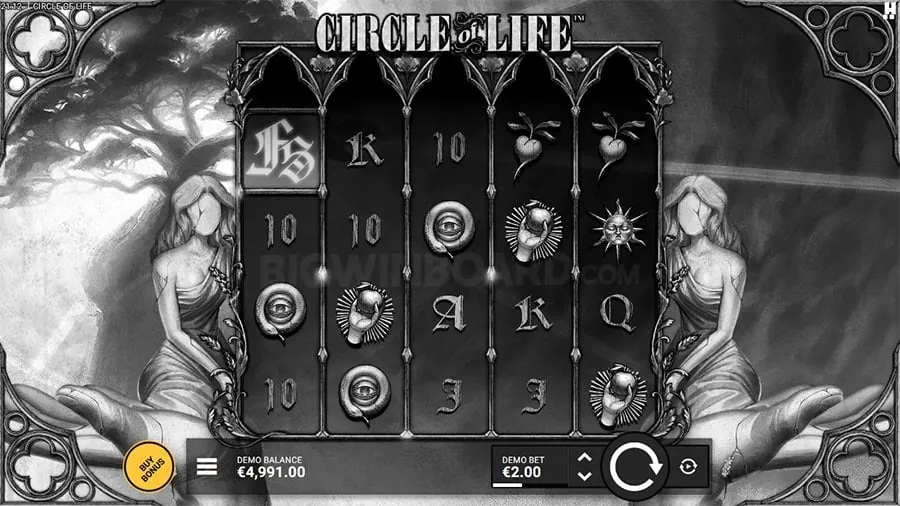
While often perceived as purely luck-based, advanced players on phlove understand that slot machines also operate on a foundation of probability, primarily expressed through their Return to Player (RTP) percentage and volatility. RTP is a long-term theoretical percentage of all wagered money that a slot machine will pay back to players over time. For example, a slot with 96% RTP means that, on average, for every $100 wagered, $96 will be returned to players. Advanced players seek out slots with higher RTPs, as these mathematically offer better long-term value. However, RTP alone doesn't tell the whole story.
Volatility (also known as variance) is a crucial concept for advanced slot players. It describes the risk level associated with a particular slot game. High volatility slots tend to pay out less frequently but offer larger wins, including substantial jackpots. Low volatility slots, on the other hand, pay out more often but with smaller amounts. Medium volatility slots fall somewhere in between. An advanced player's choice of slot volatility depends on their bankroll size, risk tolerance, and playing style. If you have a large bankroll and are comfortable with potentially long dry spells in pursuit of a big win, high volatility slots might be appealing. If you prefer more frequent, albeit smaller, wins to sustain your play, low volatility slots are a better fit. phlove offers a diverse range of slot games, and understanding their volatility helps players tailor their gaming experience to their strategic goals.
Furthermore, advanced players also consider features like bonus rounds, free spins, and multipliers, as these can significantly alter the game's effective RTP and volatility during specific phases of play. Analyzing paytables and understanding how different symbol combinations contribute to the overall probability of a big win is another layer of strategic depth for slot enthusiasts on the phlove mobile platform. It's about combining the theoretical RTP with the practical implications of volatility and bonus features to make informed decisions about which slots to play and how to manage your bets.
Strategies for Managing Risk and Maximizing Returns
For advanced players at phlove, effective risk management and strategies to maximize returns are deeply intertwined with a sophisticated understanding of probability. One key strategy is bankroll management, which involves setting strict limits on how much money you are willing to wager and lose within a given period. This isn't just about discipline; it's a probabilistic approach to longevity in gaming. By managing your bankroll based on the house edge and volatility of the games you play, you can withstand periods of negative variance and continue playing until positive variance potentially evens things out or leads to a win. For instance, playing a high-volatility slot requires a larger bankroll to absorb the longer dry spells compared to a low-volatility game.
Another advanced strategy involves understanding the concept of Expected Value (EV). In gambling, EV is the average outcome of a wager if it were to be repeated an infinite number of times. A positive EV indicates a profitable long-term strategy, while a negative EV suggests a long-term loss. While most casino games have a negative EV due to the house edge, advanced players at phlove look for opportunities to turn the tables, such as exploiting promotions, bonuses, or situations in poker where their calculated odds give them an edge. For example, a matched deposit bonus might temporarily create a positive EV situation, allowing players to play with a statistical advantage.